An encyclopedia of Indian civilization.

Culture · The Great Epic

The Mahābhārata

A hundred thousand verses on a single quarrel between cousins — and the war that ended an age. A living atlas of the world's longest poem: its story, its people, its kingdoms, and the eighteen days that emptied them.
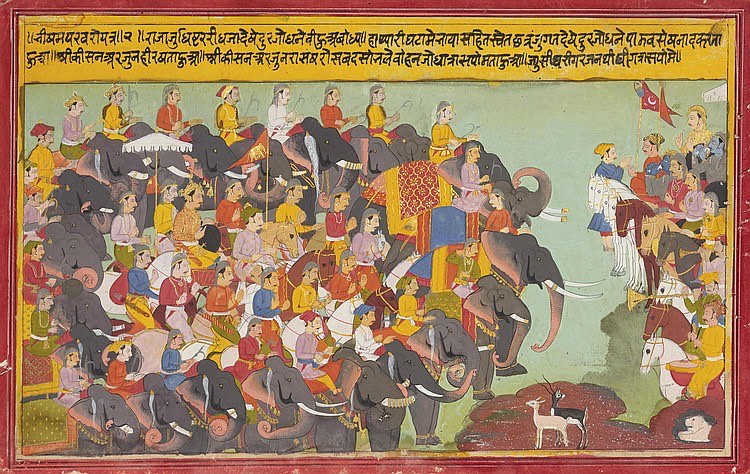
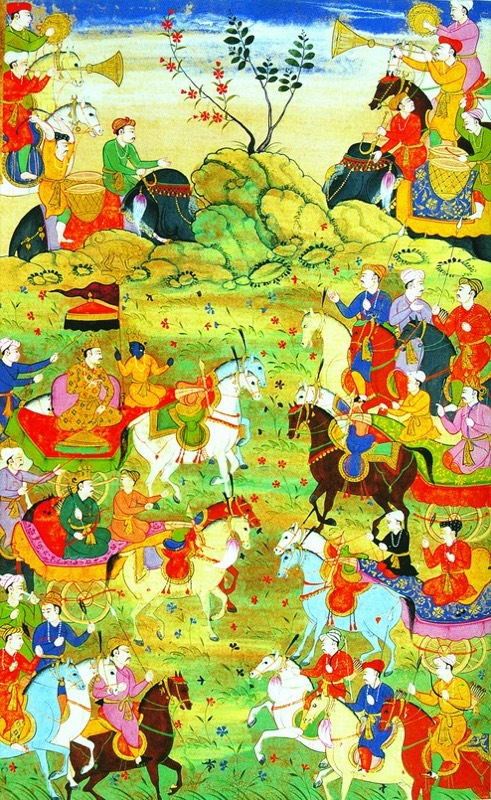
Two armies of elephants, chariots and massed riders face each other across a green field at Kurukṣetra, with a band of Devanagari text above — Mewar painting
The armies face each other at Kurukṣetra · Mewar, c. 1700 · public domain
Start here — if the epic is new to you

The Mahābhārata is the longest poem ever composed — a hundred thousand verses — and at its heart is a family quarrel. Two sets of royal cousins, the five Pāṇḍava brothers and their hundred Kaurava cousins, cannot share one throne. A rigged dice game, a thirteen-year exile, a failed peace — and then an eighteen-day war that empties an age. Everything else the poem carries, the Bhagavad Gītā included, hangs on that spine. This page is an atlas of it all — read it in any order, at any depth.

  1. Read the Story first. Eighteen books in order — each has a one-line version, and a fuller retelling if you want it.
  2. Look people up as you go. Every name on this page is in The People — search it whenever you lose track of who someone is.
  3. Then wander. The Kingdoms map, the war day by day in The Eighteen Days, the full Timeline, and the Ideas underneath it all.
parva — a book of the poemPāṇḍava — the five brothersKaurava — their hundred cousinsastra — a divine weaponā, ṣ, ṇ — the marks are pronunciation guides; read past them freely
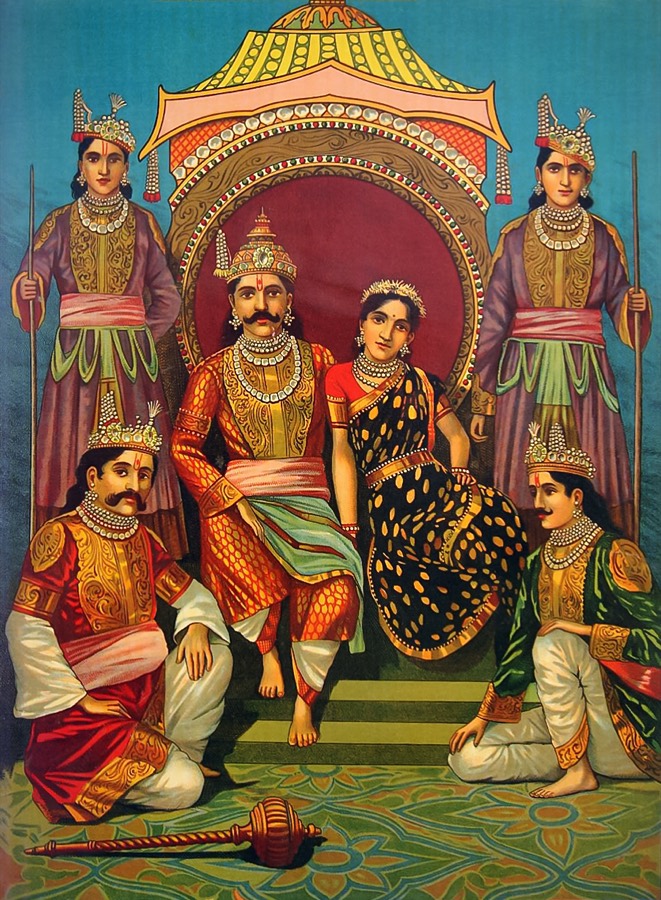
The five Pāṇḍava brothers grouped around a throne with Draupadī seated beside the eldest
The five Pāṇḍava brothers and Draupadī, wife to all five. Raja Ravi Varma press, c. 1910.
Yudhiṣṭhira
The eldest Pāṇḍava — a king so bound by honour he cannot refuse a dice game.
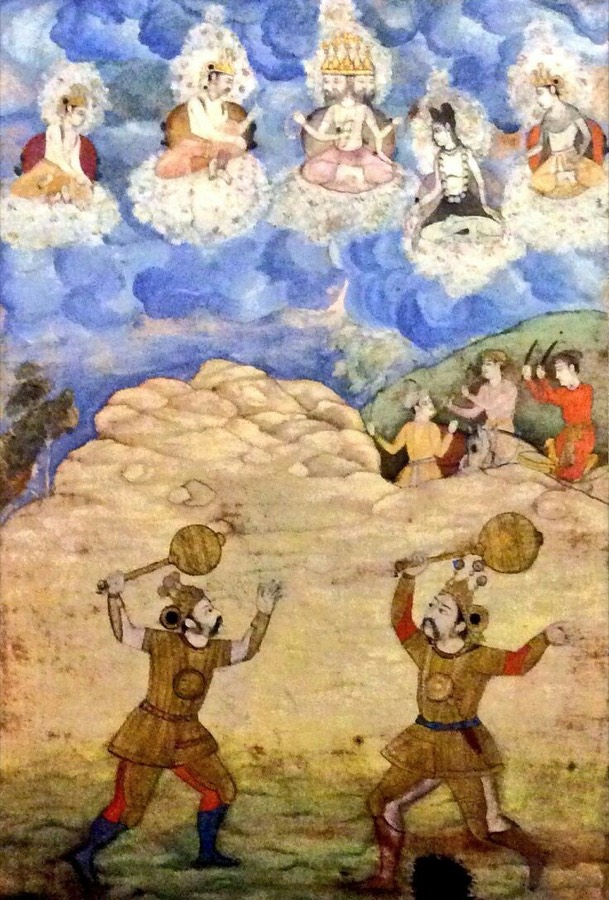
Bhīma and Duryodhana swing their maces at one another while the gods watch from the clouds — Razmnāma, 1598
Bhīma
The strongest of the five. His mace ends the war.
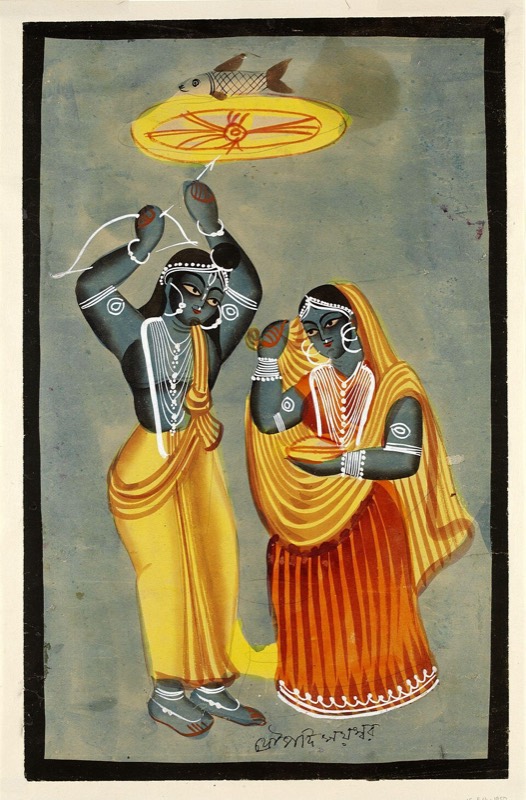
Arjuna with his bow beside Draupadī, the pierced target overhead — Kalighat painting, c. 1885
Arjuna
The peerless archer. The Bhagavad Gītā is spoken to him.
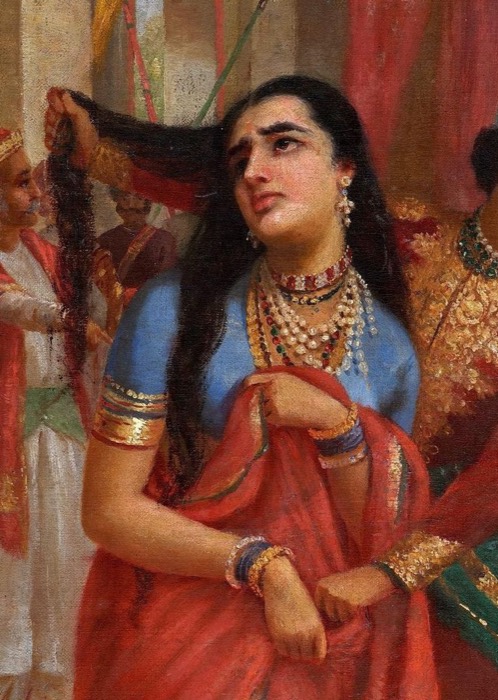
Draupadī in the dice hall, her hair seized — Raja Ravi Varma, c. 1890
Draupadī
Wife to all five brothers. Her humiliation at the dice game makes the war certain.
Kṛṣṇa the charioteer turns to counsel Arjuna — Mughal painting
Kṛṣṇa
God on the field — Arjuna's charioteer, sworn to lift no weapon of his own.
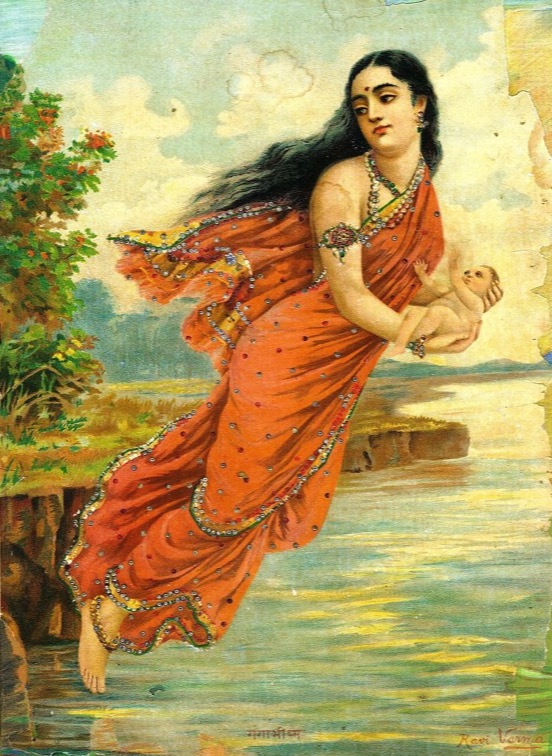
The river-goddess Gaṅgā hovers over the water carrying her infant son, the future Bhīṣma — Raja Ravi Varma press
Bhīṣma
Great-uncle to both sides, bound by a terrible vow — first commander of the Kaurava host.
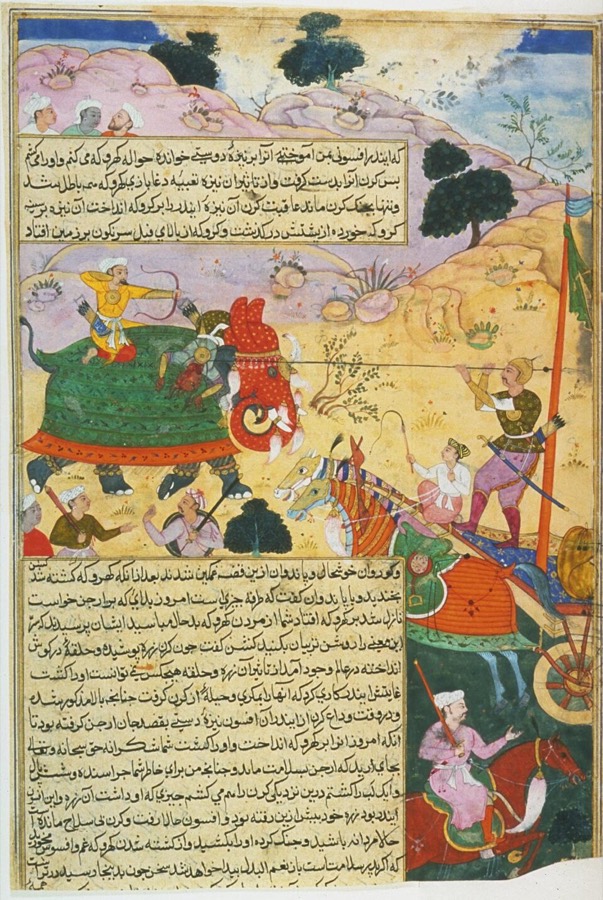
Karṇa, in yellow atop a war elephant, draws his bow — Razmnāma, 1616–17
Karṇa
The Pāṇḍavas' unknown eldest brother, abandoned at birth — sworn to Duryodhana.
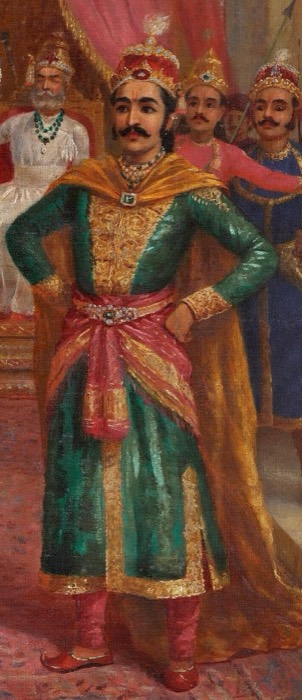
Duryodhana stands in court, hands on hips — Raja Ravi Varma
Duryodhana
The eldest Kaurava, who will not yield the Pāṇḍavas even five villages.
The Story18 Parvas

On the text  This atlas follows the Bhandarkar Critical Edition as its spine and Kisari Mohan Ganguli's public-domain translation for English, with major regional and folk variants flagged rather than folded in silently. Names use IAST diacritics.
The People
Pāṇḍava side Kaurava side Elders & kin Divine & sages
The LineageCandravaṃśa · Lunar Dynasty

Every combatant at Kurukṣetra descends from a single line — the Lunar Dynasty of Chandra, running through Bharata (who gives the land its name, Bhārata) to old king Śāntanu. From him the house splits, and the split becomes the war.

Colour marks Kurukṣetra allegiance, not birth. "Union" nodes note the marriage or divine father that produced the next generation — several Pāṇḍavas are sons of gods by niyoga, and Karṇa is Kuntī's firstborn by Sūrya, abandoned before her marriage.

The KingdomsBhāratavarṣa · c. epic era
Marched for the Pāṇḍavas Marched for the Kauravas Neutral / dividedSelect a kingdom →
The Eighteen DaysKurukṣetra · Dharma-kṣetra

Eleven akṣauhiṇīs for Duryodhana, seven for the Pāṇḍavas — roughly four million men by the poem's own arithmetic. Four generals command the Kaurava host in turn; each falls, and the war shortens. Select a day.
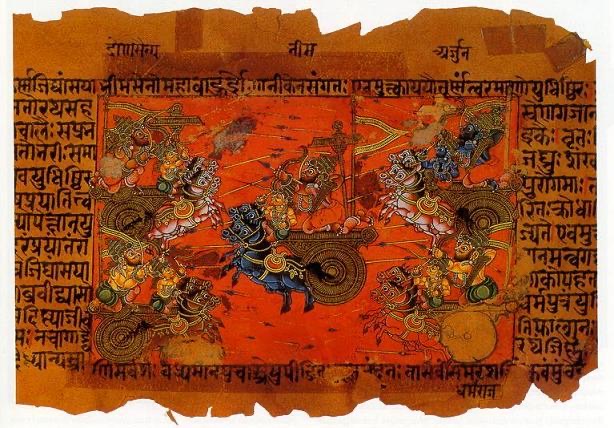
A red battle scene of chariots and archers ringed by Sanskrit text in an illustrated Mahābhārata manuscript
The battle of Kurukṣetra · illustrated Mahābhārata manuscript · public domain
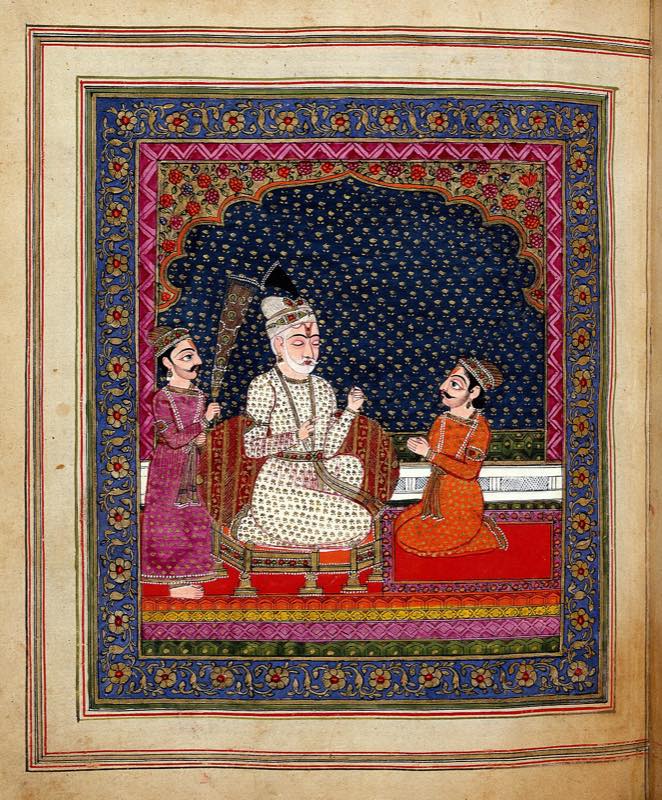
The blind king Dhṛtarāṣṭra seated with eyes closed as Sañjaya kneels before him, recounting the war
How the war is told — the blind king Dhṛtarāṣṭra hears each day from Sañjaya, who is granted sight of the whole field · Wellcome Collection (CC BY 4.0)
After the eighteenth day  Only ten warriors are said to survive the field — the five Pāṇḍavas, Kṛṣṇa, Sātyaki and Yuyutsu on one side; Aśvatthāmā, Kṛpa and Kṛtavarmā on the other. That night the three Kaurava survivors raid the sleeping Pāṇḍava camp and kill nearly everyone left, including Draupadī's five sons. The victory is total and empty — the subject of the epic's long, grieving second half.
The Timeline

The whole arc in order — from the dynasty's origins, through the dice game and the exile, to the war and the long aftermath. Colour bands mark the eras.

The IdeasWhat the poem is about

The Mahābhārata is a war story wrapped around a philosophy. Four ideas do most of the work.

On the paintings  Every image on this page is a real painting of the epic, credited where it appears: folios from the Razmnāma — the Persian Mahābhārata made for the Mughal court (1598–1617, including a folio by the artist Madhu and one now at the Metropolitan Museum of Art, CC0); Mewar and Pahari manuscript paintings; a Kalighat Arjuna and Draupadī; Nandalal Bose's Kirāta-Arjuna (1914); oils and press lithographs by Raja Ravi Varma; and a Dhṛtarāṣṭra and Sañjaya from the Wellcome Collection (CC BY 4.0). All are in the public domain or under open licence, via Wikimedia Commons.
The Indosphere · Culture · Anchored to the BORI Critical Edition & Ganguli · Variants flagged, not folded in