The Rāmāyaṇa
A prince exiled by a promise, a wife carried over the sea, an army of monkeys, and a bridge built to the island of the demon king. A living atlas of the ādi-kāvya — its story, its people, the road it walks south, and the war that ends it.
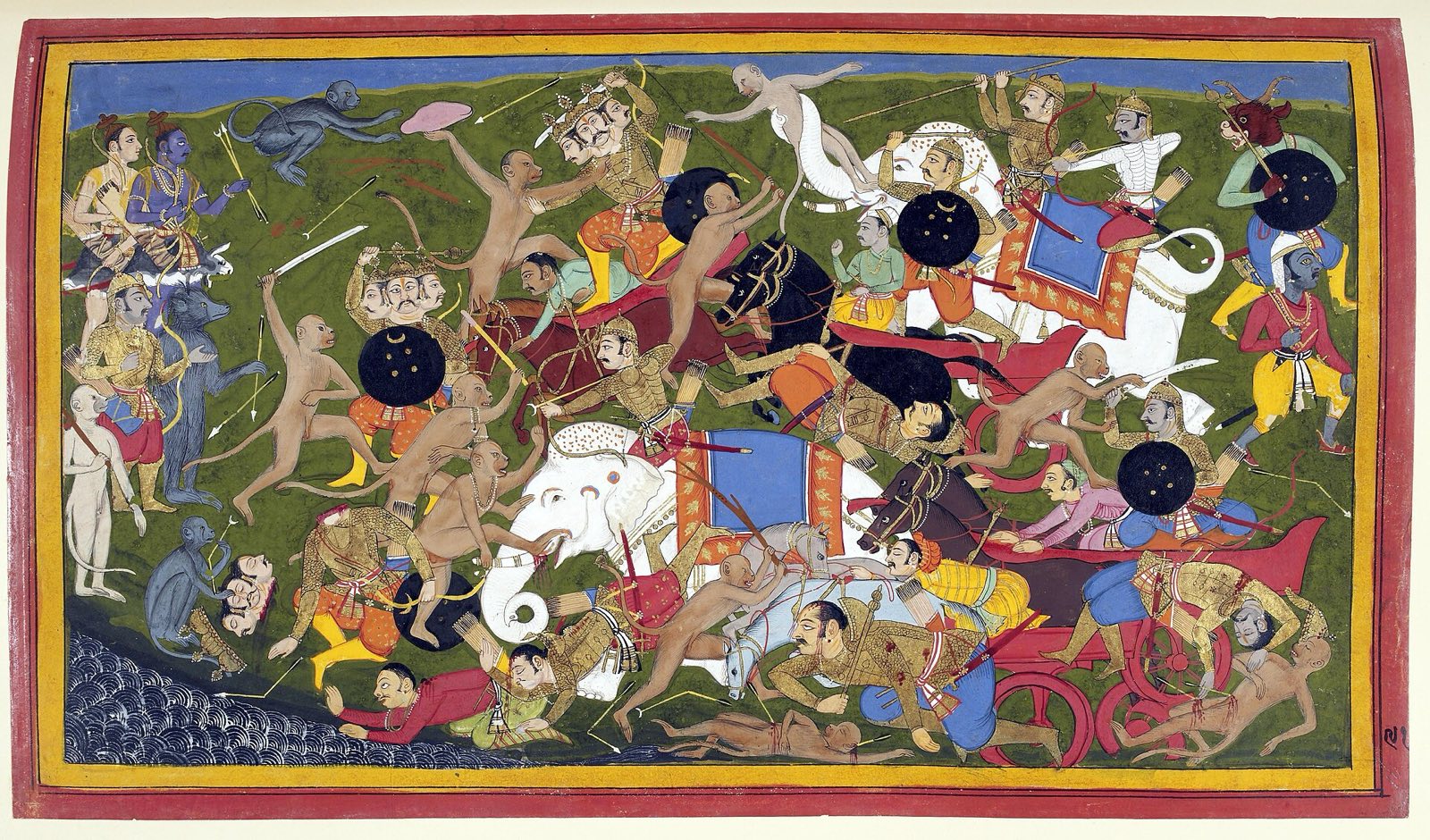
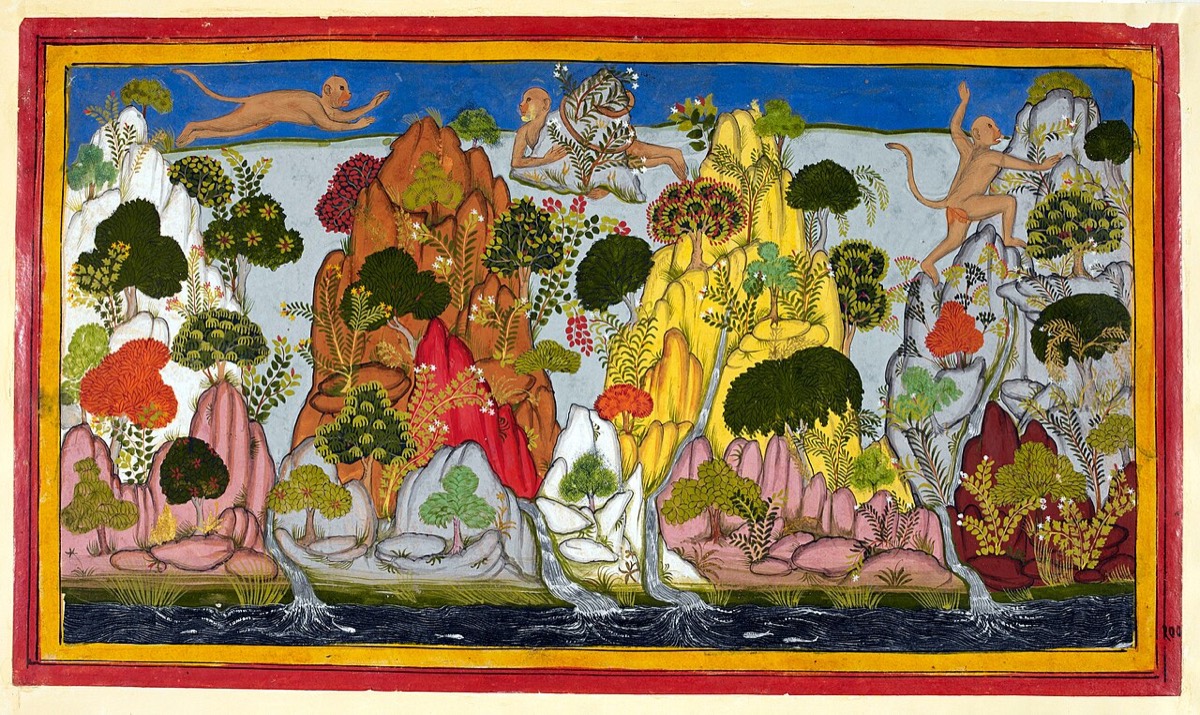
The Rāmāyaṇa is one of the two great Sanskrit epics of ancient India — the ādi-kāvya, the "first poem," told and retold across Asia for well over two thousand years. It is a single story, walked from beginning to end: a prince is turned out of his own coronation by a promise his father cannot take back; his wife is stolen away to an island fortress; and an army of monkeys helps him cross the sea to win her home. This page is an atlas of that story — read it in any order, at any depth.
- Read the Story first. Seven short books in order — each has a one-line version, and a fuller retelling if you want it.
- Look people up as you go. Every name on this page is in The People — search it whenever you lose track of who someone is.
- Then wander. The road south on The Journey map, the war movement by movement, the full Timeline, and the Ideas underneath it all.
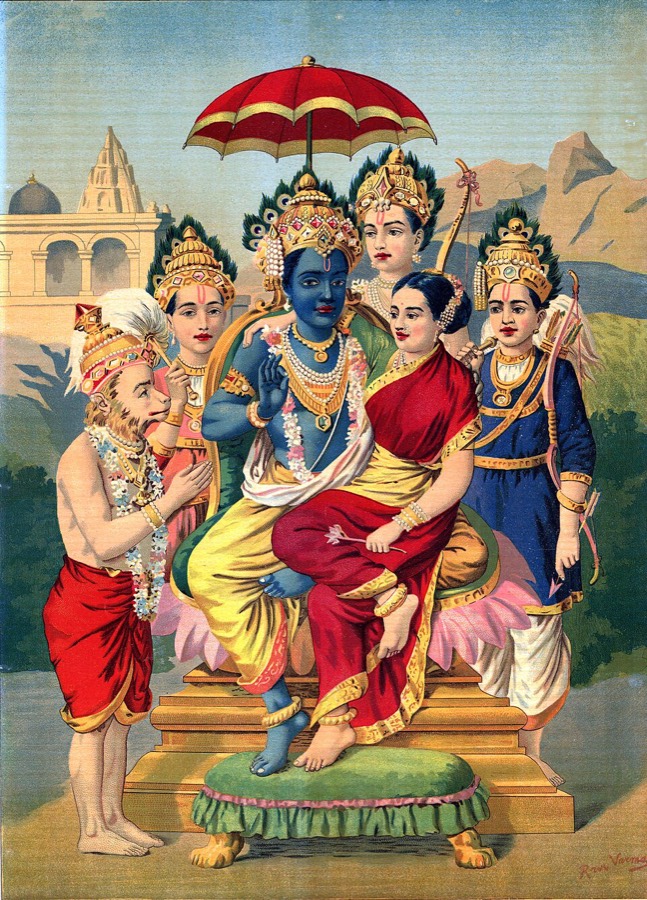
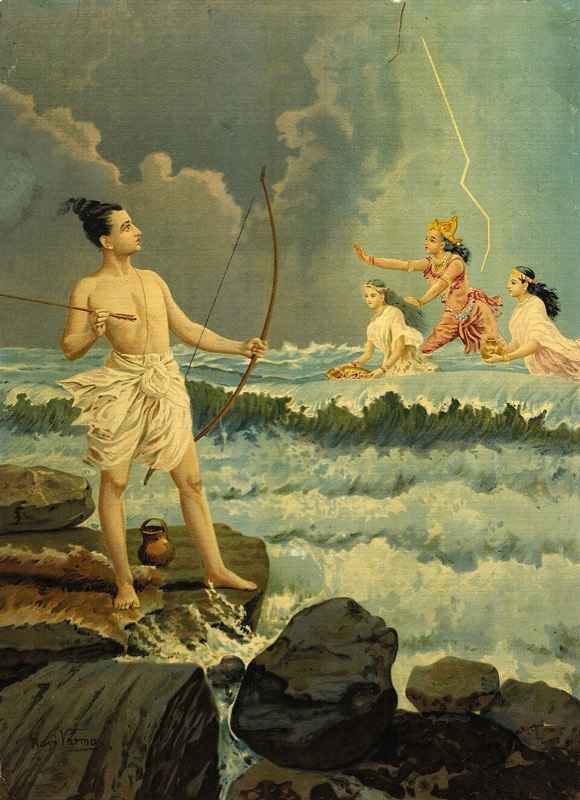
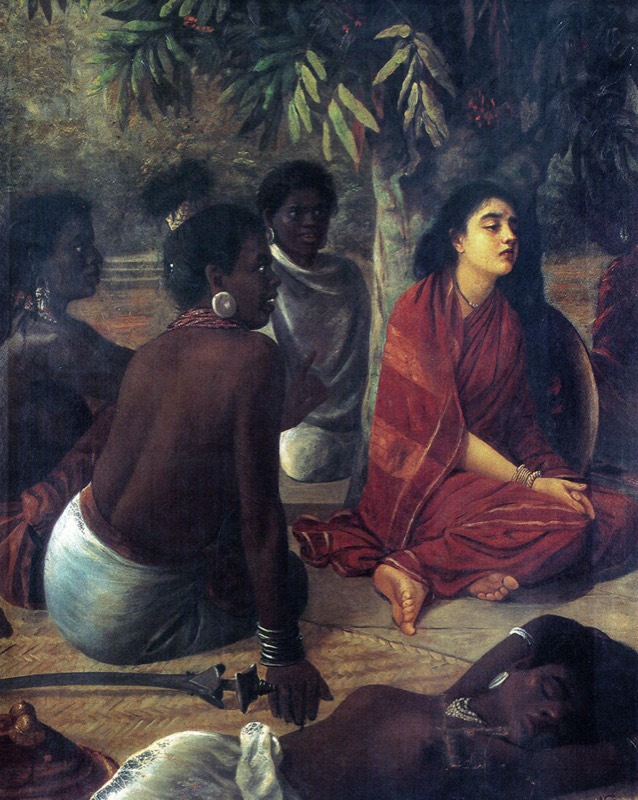
No figure matches that search.
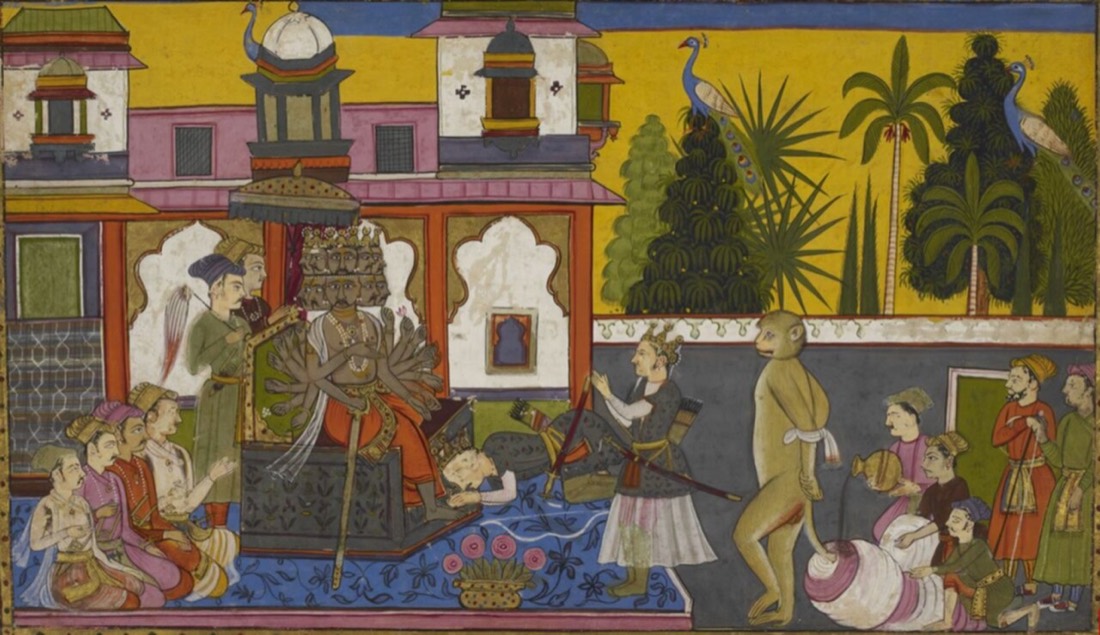
The epic sets three lineages against one another: the solar kings of Ayodhyā, descended from Ikṣvāku; the rākṣasas of Laṅkā, descended from the brahmin sage Pulastya; and the vanaras, fathered on the forest by the gods themselves. Rāma and Rāvaṇa are not opposites by birth — both come of ancient and honourable stock.
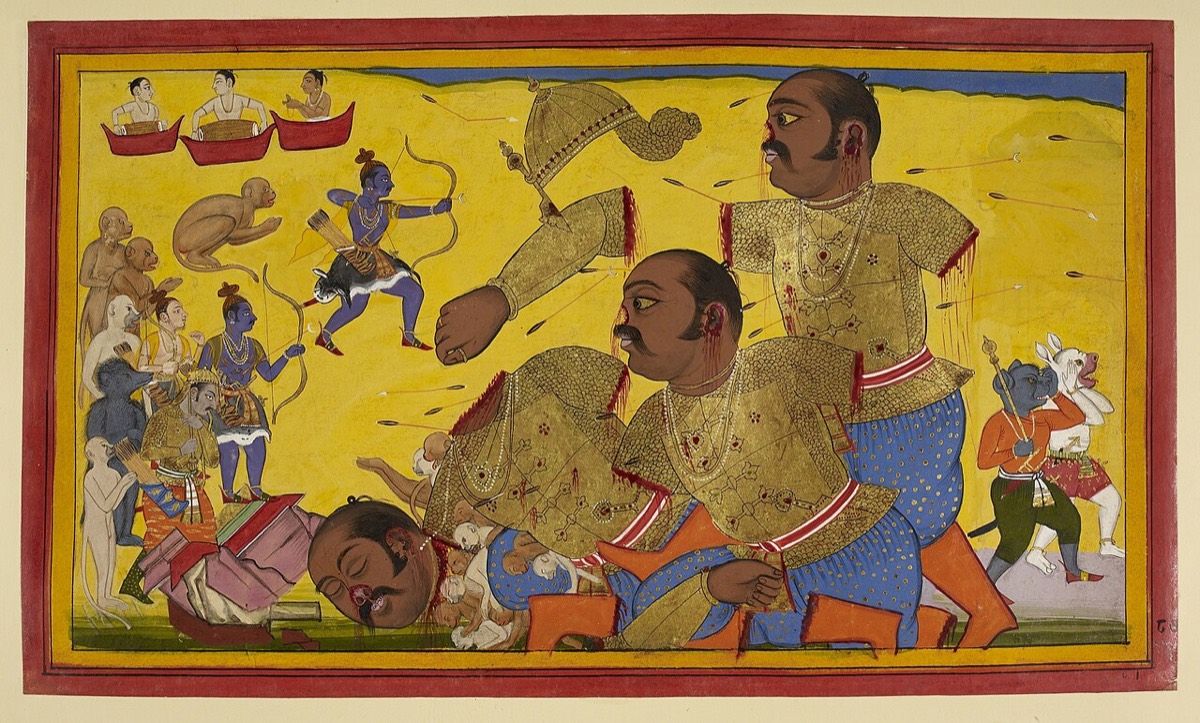
The Yuddha Kāṇḍa does not count its days as the Mahābhārata counts Kurukṣetra's eighteen; the fighting is told in waves, each carrying a champion of Laṅkā out to meet the vanara host and each ending with his death. What follows are the book's movements in the order the Critical Edition gives them. Select one.
The whole arc in order — from the childless king's sacrifice, through the two boons and the fourteen years, to the war on the island and the long, unquiet aftermath. Colour bands mark the movements of the poem.
The Mahābhārata is a war story wrapped around a philosophy. The Rāmāyaṇa is something rarer — a tragedy built entirely out of promises kept.